Tariffs and Trade Updates and Information, visit www.chambercheck.ca

Tariffs and Trade Updates and Information, visit www.chambercheck.ca
|
|
||
|
Holding an elected position is not an easy task, but an important one.
As the August 21 nomination deadline for the 2026 municipal election approaches, those thinking of putting their name forward should remember that municipal councils and school boards make decisions that affect local services, infrastructure, public safety, recreation, housing, transportation, and community development and by running for office, individuals can help shape these decisions and represent the interests of residents.
However, unlike elected federal and provincial positions, municipal politics tend to spark a lower amount of interest in terms of not only voter turnout but often potential candidates.
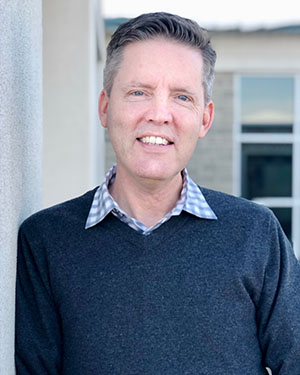
“I think there is always the fear of losing and it can be a bit intimidating and the fear they may be open to public scrutiny through social media,” says Cambridge Chamber of Commerce President & CEO Greg Durocher, who served on Cambridge City Council throughout the 1990s. “People may also think they don’t really know anything about public office and they’re afraid they might embarrass themselves, but the truth is nobody really knows much about it when they first run for public office.”
He notes City staff is there to help councillors navigate the system, providing those elected put in the effort to become familiar with their new responsibilities.
“You don’t need to hold any special degree,” says Greg. “All you need is to be is passionate about your community and passionate about trying to create the best community you possibly can.”
Making decisions and setting priorities
He says residents often have ideas about how to improve roads, parks, public transit, economic development, environmental sustainability, or local programs and that serving as a mayor, councillor, or school board trustee allows a person to bring those ideas forward and work with others to turn them into action.
Rather than simply commenting on local issues, elected officials have a direct role in making decisions and setting priorities.
“If you’re really convinced you would like to get something changed and it’s a high priority for you, or even your peers or friends, you must get over the hurdle of saying, ‘I just don’t know whether I’m smart enough’,” says Greg. “In most cases, everyone enters politics on the same level.”
In his case, as the former president of the Cambridge Minor Baseball Association and Cubs Den, a desire for improved baseball fields first prompted him to run and win his first council position.
“I’m the kind of person that says, ‘Why wait for somebody else to do it, just do it yourself’. So, I jumped in and ended up becoming the Chair of the council lead on parks and recreation,” says Greg. “Then it became not about just fixing baseball diamonds but coming to an understanding as to why it’s important that ball diamonds be fixed properly.”
Using his experience as a local business leader assisted him in this new role.
“I was a big proponent of finding efficiencies because as a small business owner at the time, that’s what I had to do every day in my work life,” he says, adding those ‘efficiencies’ helped save the City a large amount of money. “But when you get elected you learn things and find ways to get things accomplished.”
Decisions made at the local level can be seen and felt quickly, whether through improvements to public facilities, new community programs, or changes to local policies which allows elected officials to see the results of their work and engage directly with residents about community priorities.
Municipal leaders have impact
“Municipal leaders are the ones who affect your everyday life because you don’t see too much of what the federal and provincial governments do for you on a daily basis,” says Greg, noting the fact those two levels of government take a much larger percentage of household incomes in Canada compared to municipal governments. “If more people understood that I think we’d see a lot greater engagement at the municipal level.”
In terms of candidates, according to AMO (Association of Municipalities of Ontario), in Cambridge’s last two municipal elections – 2018 and 2022 – 43 people ran for city and regional council positions (with an additional 14 people running for school board trustee positions in 2018 and 18 people in 2022).
In terms of voter turnout, only 28.8% of Cambridge’s 95,921 eligible voters cast a ballot in 2022 compared to 32.4% of the city’s 87,750 eligible voters in 2018. The provincial average for voter turnout was 32.9% in 2022 and 38% in 2018.
Greg acknowledges there is a noticeable disparity – not just a financial one - between levels of government when it comes to running election campaigns.
“The problem is federal and provincial elections wrap themselves around a brand and that’s not the case in municipal elections. In a municipal election, a candidate runs as an independent individual and there many different issues, so what might be important to a candidate might be unimportant to some voters,” he says. “But people have to remember in municipal government, everything is homegrown with ideas created out of neighbourhoods.”
Click here for more information about the 2026 municipal election in Cambridge.
ELECTIONS AT A GLANCE
2022 Municipal election - according to AMO:
95,921 eligible voters in Cambridge – 27,689 voted Turnout: 28.87% Provincial voter turnout - 32.9%
2018 Municipal election - according to AMO:
87,750 eligible voters in Cambridge – 28,292 voted Turnout: 32.24% Provincial voter turnout – 38%
Ontario election voter turnout in Cambridge – according to Elections Ontario
2025 – 45.82% (44,248) of 96,578 registered voters
2022 - 43.22% (39,591) of 91,608 registered voters
2018- 55.17% (48,762) of 88,380 registered voters
Federal election voter turnout in Cambridge – according to Elections Canada
2025 – 69.8% (65,857) of 94,289 eligible voters
2021 – 61.1% (55,187) of 90,298 eligible voters
2019 – 64.6% (58,327) of 90,291 eligible voters
|
||
|
||
|
||
|
||
|
|
|
Brian Rodnick 303 June 25, 2026 |

|
|
Greg Durocher 41 July 28, 2023 |

|
|
Canadian Chamber of Commerce 24 January 29, 2021 |

|
|
Cambridge Chamber 2 March 27, 2020 |





 750 Hespeler Road Cambridge, ON N3H 5L8
 Phone: 519-622-2221
 Fax: 519-622-0177
 Member Login